EXECUTIVE SUMMARY
- Core Innovation: The metaverse is dead.
- Market Impact: The spatial computing market is projected to reach $620 billion by 2032.
- The Verdict: The convergence of AI and spatial computing will produce 'Ambient Intelligence'—an environment where intelligence is woven into the fabric of physical space.
The Metaverse is Dead. Long Live Spatial AI represents one of the most significant developments in the Future Tech landscape today. The metaverse is dead. After Meta spent over $40 billion building virtual reality worlds that few people wanted to inhabit, the concept seemed destined for the technology graveyard. But something unexpected happened: the underlying technology matured, AI got dramatically better, and a new paradigm emerged—Spatial AI, the intelligence that understands and operates in three-dimensional space.
In this comprehensive analysis, we explore the historical context, technical underpinnings, market dynamics, and real-world case studies that define this pivotal moment. Whether you are an investor, a developer, or a policy maker, understanding these dynamics is essential for navigating the AI era.
1. Historical Context: How We Got Here
The metaverse hype peaked in 2021 when Facebook rebranded to Meta. The vision was compelling: persistent virtual worlds where people would work, socialize, and shop. But the hardware was clunky, the experiences were shallow, and the social dynamics were awkward. The pivot to Spatial AI came from an unexpected direction: Apple's Vision Pro and the realization that AI could make spatial computing actually useful.
This evolution was not linear—it was a series of step-functions. Each breakthrough unlocked new capabilities that were previously thought impossible, leading us to the inflection point we face today. Understanding this history is essential for anticipating what comes next.
2. Technical Deep Dive: Under the Hood
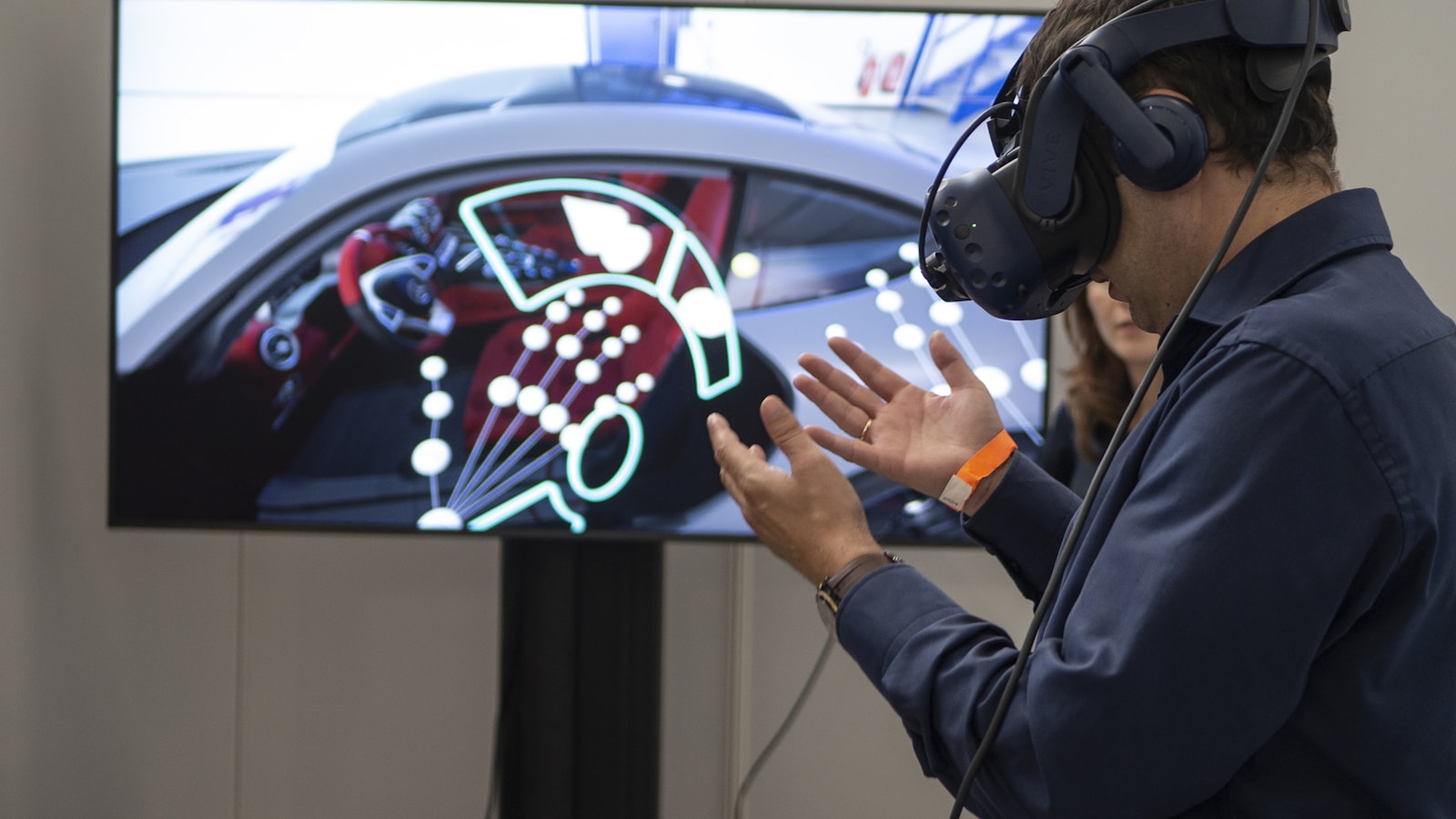
Spatial AI combines computer vision, 3D scene understanding, and language models to create systems that can perceive and reason about physical space. Apple's Vision Pro uses eye tracking, hand tracking, and spatial audio to create a seamless blend of digital and physical. NVIDIA's Omniverse platform allows AI to simulate physical environments with photorealistic accuracy, enabling robots and autonomous vehicles to train in virtual worlds.
The convergence of hardware acceleration and algorithmic innovation has reduced the cost of AI by 100x in the last 18 months, making Future Tech commercially viable at unprecedented scale. This is the defining economic force of our era.
3. Market Analysis & Economic Impact
The spatial computing market is projected to reach $620 billion by 2032. Unlike the metaverse, which required users to fully enter a virtual world, spatial computing overlays intelligence onto the real world. Enterprise applications are leading adoption: architects use it for design review, surgeons use it for procedure planning, and factory workers use it for assembly guidance.
We are witnessing a capital rotation of historic proportions. The winners of this cycle will likely define the global economy of the 2030s. The organizations that move decisively now will have structural advantages that are difficult to overcome later.
4. Real-World Case Study
Boeing uses Microsoft HoloLens and spatial AI to guide technicians through complex aircraft wiring procedures. The system overlays step-by-step instructions directly onto the physical aircraft, reducing wiring production time by 25% and error rates by 90%. This is not a consumer entertainment application—it's a productivity tool that delivers measurable ROI, which is why enterprise spatial computing is thriving while consumer VR struggled.
This is not a hypothetical future—it is a present reality. Companies that ignore these case studies risk obsolescence. The "wait and see" approach is the most dangerous strategy in an exponential market where competitive advantages compound rapidly.
5. Challenges and Considerations
The hardware form factor remains a barrier. Current spatial computing devices are too heavy, too expensive, and have limited battery life for all-day wear. The 'killer app' for consumers has not yet emerged. Privacy is also a profound concern: devices that continuously map your environment and track your gaze collect extraordinarily intimate data about your life.
These challenges are not insurmountable, but they require deliberate effort. The organizations and policymakers that engage seriously with these difficulties will be better positioned to capture the benefits of this technology while managing its risks.
6. Future Projections (2025-2030)
The convergence of AI and spatial computing will produce 'Ambient Intelligence'—an environment where intelligence is woven into the fabric of physical space. Your home will understand your routines. Your office will adapt to your needs. The interface will be invisible. This is the true successor to the metaverse: not a place you go, but an intelligence that surrounds you.
As we look to the horizon, three key trends will dominate the next five years:
- Scalability: Models will become dramatically more efficient, enabling deployment on edge devices and in resource-constrained environments.
- Ubiquity: AI capabilities will be embedded in every software product and physical device, becoming invisible infrastructure.
- Autonomy: The transition from AI as a tool to AI as an agent—systems that pursue goals, not just answer questions—will reshape every industry.
Conclusion
In the final analysis, The Metaverse is Dead. Long Live Spatial AI is a gateway to the next era of human capability. The organizations that master this domain will define the economy of the 2030s. The question is no longer if you will adapt, but how fast—and whether you will lead or follow.
Stay tuned to AI Trend Global as we continue to track this rapidly evolving story with the depth and precision it deserves.