EXECUTIVE SUMMARY
- Core Innovation: We are standing at the precipice of the post-digital age.
- Market Impact: Deep Tech investment involves longer horizons but massive payouts.
- The Verdict: Brain-Computer Interfaces like Neuralink represent the ultimate convergence.
Quantum Machine Learning: The Next Frontier represents one of the most significant developments in the Future Tech landscape today. We are standing at the precipice of the post-digital age. The convergence of Quantum Computing, Bio-engineering, and AI is creating a feedback loop of accelerating returns. This is what Ray Kurzweil called 'The Singularity'—the point where technological growth becomes uncontrollable and irreversible, fundamentally altering what it means to be human.
In this comprehensive analysis, we explore the historical context, technical underpinnings, market dynamics, and real-world case studies that define this pivotal moment. Whether you are an investor, a developer, or a policy maker, understanding these dynamics is essential for navigating the AI era.
1. Historical Context: How We Got Here
Moore's Law has held for 50 years, but silicon is hitting physical limits due to atomic tunneling effects. We are moving to specialized compute architectures. In parallel, the cost of gene sequencing has fallen faster than Moore's Law. This convergence means biology is becoming a readable and writable code, optimized by AI systems that can simulate millions of molecular interactions per second.
This evolution was not linear—it was a series of step-functions. Each breakthrough unlocked new capabilities that were previously thought impossible, leading us to the inflection point we face today. Understanding this history is essential for anticipating what comes next.
2. Technical Deep Dive: Under the Hood
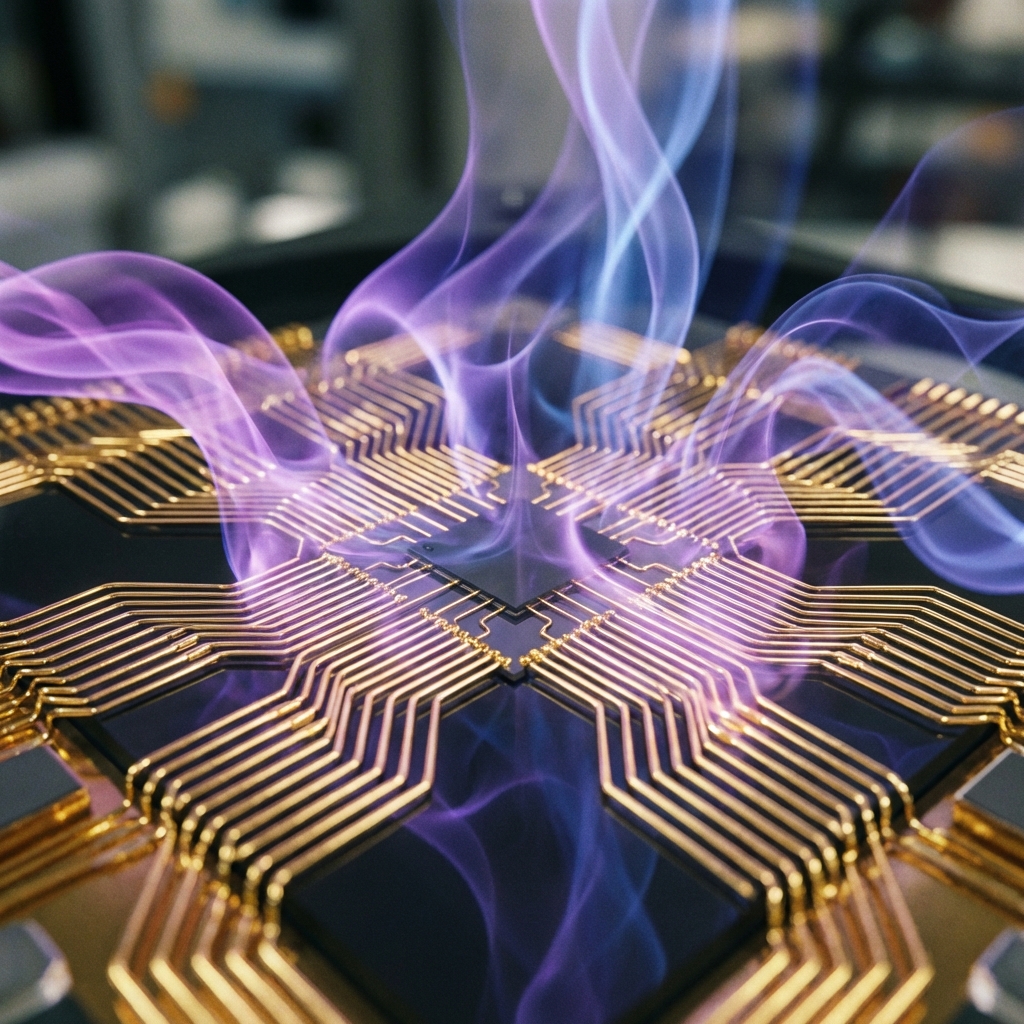
The next leap involves Neuromorphic computing—chips designed to mimic the human brain's synaptic structure using spiking neural networks. These processors promise to reduce the energy consumption of AI training by orders of magnitude. Simultaneously, Quantum Machine Learning aims to process probability states that would take a classical supercomputer millions of years to evaluate.
The convergence of hardware acceleration and algorithmic innovation has reduced the cost of AI by 100x in the last 18 months, making Future Tech commercially viable at unprecedented scale. This is the defining economic force of our era.
3. Market Analysis & Economic Impact
Deep Tech investment involves longer horizons but massive payouts. Fusion energy, guided by AI-optimized plasma control, is seeing historic breakthroughs. The 'Longevity' market is another massive target; AI is being used to simulate protein folding to discover drugs that could extend human healthspan by decades. The total addressable market for these technologies is measured in trillions.
We are witnessing a capital rotation of historic proportions. The winners of this cycle will likely define the global economy of the 2030s. The organizations that move decisively now will have structural advantages that are difficult to overcome later.
4. Real-World Case Study
AlphaFold by DeepMind solved a 50-year-old grand challenge in biology: the protein folding problem. In months, it predicted the structure of nearly all known proteins—over 200 million. This accelerates drug discovery from years to weeks. It is perhaps the most tangible proof that AI can advance basic science, not just generate text, and it won the Nobel Prize in Chemistry in 2024.
This is not a hypothetical future—it is a present reality. Companies that ignore these case studies risk obsolescence. The "wait and see" approach is the most dangerous strategy in an exponential market where competitive advantages compound rapidly.
5. Challenges and Considerations
Energy consumption is the hard wall. Training a top-tier model consumes as much electricity as a small city. If we scale 100x, we hit a hard energy constraint. We need sustainable power solutions urgently. There is also the 'Digital Divide'; these technologies are expensive. Will they create a caste system of 'Augmented' versus 'Natural' humans, with access determined by wealth?
These challenges are not insurmountable, but they require deliberate effort. The organizations and policymakers that engage seriously with these difficulties will be better positioned to capture the benefits of this technology while managing its risks.
6. Future Projections (2025-2030)
Brain-Computer Interfaces like Neuralink represent the ultimate convergence. High-bandwidth connections between human thought and the cloud will eventually allow us to think a query and receive an answer. This merges human consciousness with machine intelligence, potentially protecting us from becoming obsolete in a world of superintelligent AI. The question is not whether this will happen, but when.
As we look to the horizon, three key trends will dominate the next five years:
- Scalability: Models will become dramatically more efficient, enabling deployment on edge devices and in resource-constrained environments.
- Ubiquity: AI capabilities will be embedded in every software product and physical device, becoming invisible infrastructure.
- Autonomy: The transition from AI as a tool to AI as an agent—systems that pursue goals, not just answer questions—will reshape every industry.
Conclusion
In the final analysis, Quantum Machine Learning: The Next Frontier is a gateway to the next era of human capability. The organizations that master this domain will define the economy of the 2030s. The question is no longer if you will adapt, but how fast—and whether you will lead or follow.
Stay tuned to AI Trend Global as we continue to track this rapidly evolving story with the depth and precision it deserves.