EXECUTIVE SUMMARY
- Core Innovation: The open-source AI movement has produced one of the most consequential debates in technology: should the most powerful AI systems be freely available to anyone, or does that create unacceptable risks? Meta's decision to release Llama 3.
- Market Impact: The release of Llama 3.
- The Verdict: The open-source AI ecosystem will continue to close the gap with closed models.
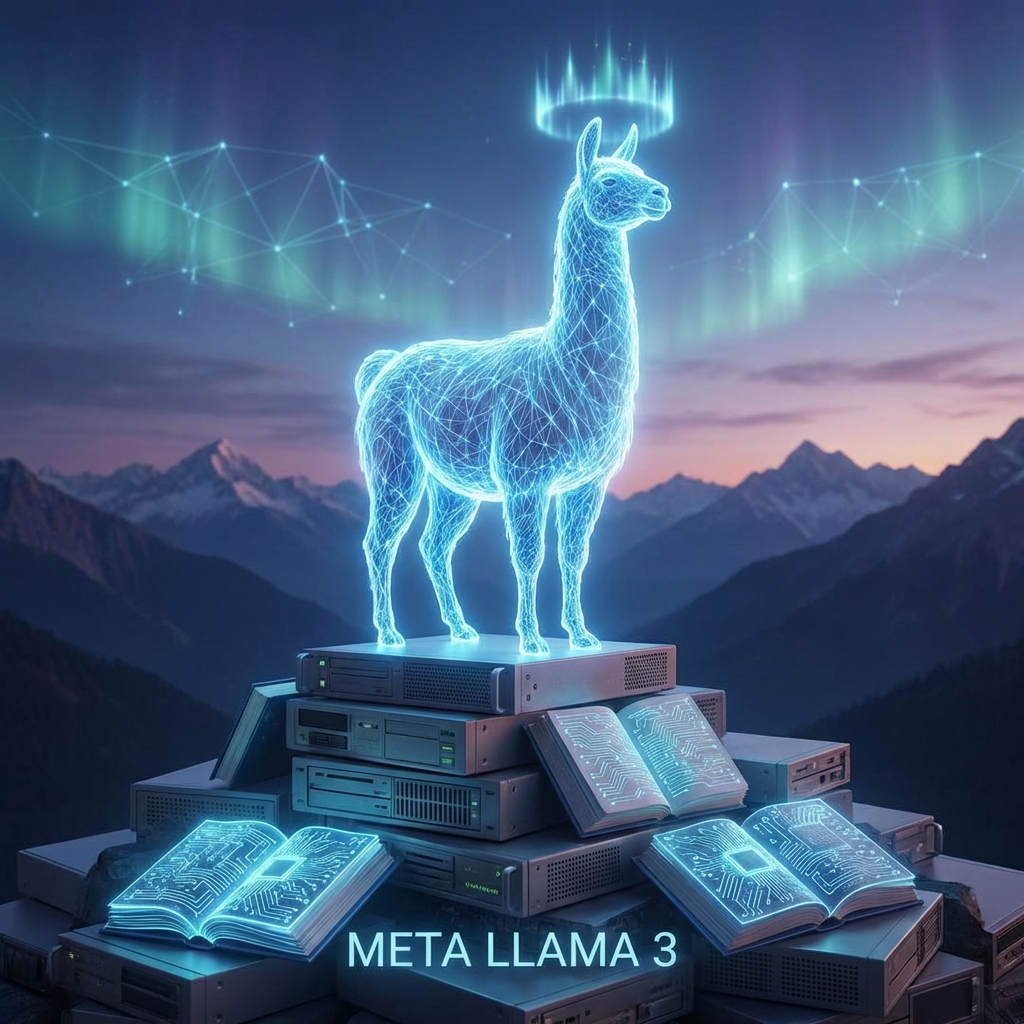
Llama 3.1 405B: Open Source Beats GPT-4 represents one of the most significant developments in the Generative AI landscape today. The open-source AI movement has produced one of the most consequential debates in technology: should the most powerful AI systems be freely available to anyone, or does that create unacceptable risks? Meta's decision to release Llama 3.1 405B—a model that matches GPT-4 on many benchmarks—as open source has forced this debate into the mainstream, with profound implications for the future of AI development.
In this comprehensive analysis, we explore the historical context, technical underpinnings, market dynamics, and real-world case studies that define this pivotal moment. Whether you are an investor, a developer, or a policy maker, understanding these dynamics is essential for navigating the AI era.
1. Historical Context: How We Got Here
Meta's open-source AI strategy began with the release of Llama 1 in February 2023, which was initially restricted to researchers but quickly leaked to the public. Rather than fighting the leak, Meta embraced openness and released Llama 2 publicly in July 2023. The strategy was partly competitive—by commoditizing the model layer, Meta undermines the business models of OpenAI and Google—and partly philosophical, reflecting CEO Mark Zuckerberg's genuine belief in open development.
This evolution was not linear—it was a series of step-functions. Each breakthrough unlocked new capabilities that were previously thought impossible, leading us to the inflection point we face today. Understanding this history is essential for anticipating what comes next.
2. Technical Deep Dive: Under the Hood
Llama 3.1 405B uses a standard transformer architecture but with several key optimizations. It employs Grouped Query Attention (GQA) to reduce memory requirements during inference, making it more practical to run on available hardware. The model was trained on 15 trillion tokens of data, significantly more than previous Llama versions, and includes a 128K context window that allows it to process very long documents.
The convergence of hardware acceleration and algorithmic innovation has reduced the cost of AI by 100x in the last 18 months, making Generative AI commercially viable at unprecedented scale. This is the defining economic force of our era.
3. Market Analysis & Economic Impact
The release of Llama 3.1 405B has dramatically changed the economics of AI deployment. Companies that previously paid OpenAI $30 per million tokens for GPT-4 can now run equivalent models on their own infrastructure for a fraction of the cost. This is particularly significant for enterprises with sensitive data that cannot be sent to third-party APIs. The open-source AI market is projected to reach $40 billion by 2030.
We are witnessing a capital rotation of historic proportions. The winners of this cycle will likely define the global economy of the 2030s. The organizations that move decisively now will have structural advantages that are difficult to overcome later.
4. Real-World Case Study
Mistral AI, a French startup, has built a successful business on top of open-source models. By fine-tuning and optimizing open-source models for specific use cases, Mistral has created products that compete with GPT-4 at a fraction of the cost. The company raised $1 billion at a $6 billion valuation in 2024, demonstrating that there is a viable business model in the open-source AI ecosystem.
This is not a hypothetical future—it is a present reality. Companies that ignore these case studies risk obsolescence. The "wait and see" approach is the most dangerous strategy in an exponential market where competitive advantages compound rapidly.
5. Challenges and Considerations
The open-source AI debate centers on dual-use risk. A model powerful enough to assist with scientific research is also powerful enough to assist with creating bioweapons. Unlike closed models where safety measures can be enforced, open-source models can be fine-tuned to remove safety filters. The AI safety community is divided on whether the benefits of openness outweigh these risks.
These challenges are not insurmountable, but they require deliberate effort. The organizations and policymakers that engage seriously with these difficulties will be better positioned to capture the benefits of this technology while managing its risks.
6. Future Projections (2025-2030)
The open-source AI ecosystem will continue to close the gap with closed models. The community's ability to collectively optimize, fine-tune, and specialize models for specific tasks is a powerful force. We expect to see open-source models that match GPT-5 within 12-18 months of its release. The question is whether this democratization of AI capability will be net positive for humanity—a question that may not have a clear answer for years.
As we look to the horizon, three key trends will dominate the next five years:
- Scalability: Models will become dramatically more efficient, enabling deployment on edge devices and in resource-constrained environments.
- Ubiquity: AI capabilities will be embedded in every software product and physical device, becoming invisible infrastructure.
- Autonomy: The transition from AI as a tool to AI as an agent—systems that pursue goals, not just answer questions—will reshape every industry.
Conclusion
In the final analysis, Llama 3.1 405B: Open Source Beats GPT-4 is a gateway to the next era of human capability. The organizations that master this domain will define the economy of the 2030s. The question is no longer if you will adapt, but how fast—and whether you will lead or follow.
Stay tuned to AI Trend Global as we continue to track this rapidly evolving story with the depth and precision it deserves.