EXECUTIVE SUMMARY
- Core Innovation: 2025 marks a watershed moment in AI governance.
- Market Impact: AI regulation is creating a new compliance industry.
- The Verdict: The next phase of AI regulation will focus on frontier models—the most powerful AI systems that pose the greatest potential risks.
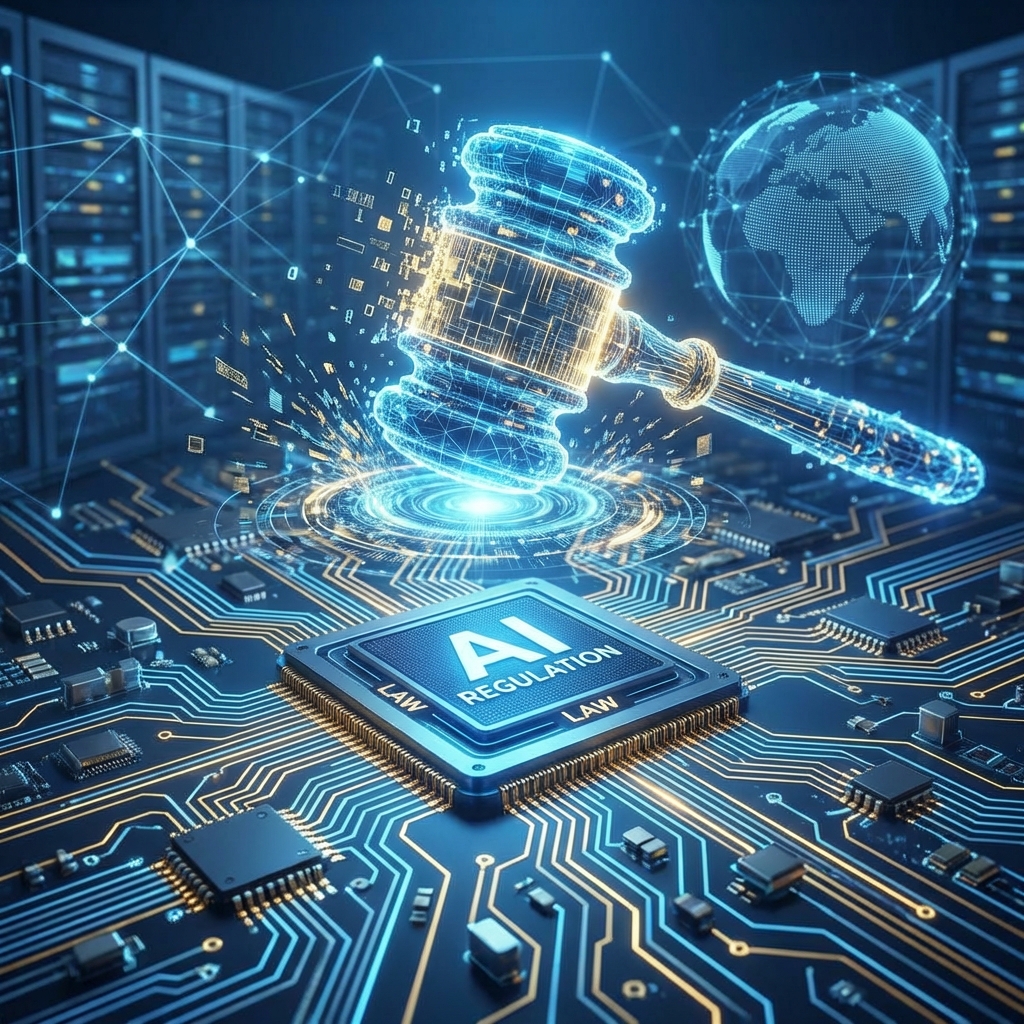
AI Regulation 2025: Global Policy Landscape represents one of the most significant developments in the AI Ethics landscape today. 2025 marks a watershed moment in AI governance. After years of voluntary commitments and aspirational guidelines, governments around the world are implementing binding AI regulations with real enforcement mechanisms. The EU AI Act has entered into force, the US has issued executive orders on AI safety, and China has implemented its own regulatory framework. The era of AI self-regulation is over.
In this comprehensive analysis, we explore the historical context, technical underpinnings, market dynamics, and real-world case studies that define this pivotal moment. Whether you are an investor, a developer, or a policy maker, understanding these dynamics is essential for navigating the AI era.
1. Historical Context: How We Got Here
The regulatory journey began with the EU's first AI regulation proposal in 2021, which took four years to finalize. The process was dramatically accelerated by the rapid capability gains of 2022-2023, which made the risks of AI more tangible to policymakers. The UK's AI Safety Summit at Bletchley Park in November 2023, attended by representatives from 28 countries including China and the US, marked the first serious international coordination on AI governance.
This evolution was not linear—it was a series of step-functions. Each breakthrough unlocked new capabilities that were previously thought impossible, leading us to the inflection point we face today. Understanding this history is essential for anticipating what comes next.
2. Technical Deep Dive: Under the Hood
The EU AI Act uses a risk-based approach, categorizing AI systems into four risk levels: unacceptable risk (banned), high risk (heavily regulated), limited risk (transparency requirements), and minimal risk (largely unregulated). High-risk applications include AI used in critical infrastructure, education, employment, essential services, law enforcement, and border control. These systems must meet strict requirements for data quality, transparency, human oversight, and accuracy.
The convergence of hardware acceleration and algorithmic innovation has reduced the cost of AI by 100x in the last 18 months, making AI Ethics commercially viable at unprecedented scale. This is the defining economic force of our era.
3. Market Analysis & Economic Impact
AI regulation is creating a new compliance industry. Law firms, consulting companies, and specialized startups are all building practices around AI governance. The cost of compliance is significant—estimates suggest that meeting EU AI Act requirements for a high-risk AI system costs between $50,000 and $500,000. This creates a barrier to entry that favors large incumbents over startups, potentially concentrating AI development in fewer hands.
We are witnessing a capital rotation of historic proportions. The winners of this cycle will likely define the global economy of the 2030s. The organizations that move decisively now will have structural advantages that are difficult to overcome later.
4. Real-World Case Study
The EU AI Act's prohibition on real-time biometric surveillance in public spaces has had immediate commercial consequences. Several facial recognition companies have announced they will not offer their products in the EU market. Clearview AI, which scraped billions of photos from the internet to build a facial recognition database, has been fined by multiple EU data protection authorities and effectively banned from operating in Europe.
This is not a hypothetical future—it is a present reality. Companies that ignore these case studies risk obsolescence. The "wait and see" approach is the most dangerous strategy in an exponential market where competitive advantages compound rapidly.
5. Challenges and Considerations
Regulatory fragmentation is the primary challenge. The EU, US, UK, China, and other jurisdictions are developing different regulatory frameworks with different requirements. A company operating globally must navigate a patchwork of conflicting rules. There is also the fundamental challenge of regulating technology that evolves faster than the legislative process—rules written today may be obsolete by the time they are enforced.
These challenges are not insurmountable, but they require deliberate effort. The organizations and policymakers that engage seriously with these difficulties will be better positioned to capture the benefits of this technology while managing its risks.
6. Future Projections (2025-2030)
The next phase of AI regulation will focus on frontier models—the most powerful AI systems that pose the greatest potential risks. We expect to see mandatory safety evaluations before deployment, compute thresholds that trigger regulatory oversight, and international agreements on AI development standards. The governance of AI is becoming as important as the development of AI, and the decisions made in the next five years will shape the trajectory of the technology for decades.
As we look to the horizon, three key trends will dominate the next five years:
- Scalability: Models will become dramatically more efficient, enabling deployment on edge devices and in resource-constrained environments.
- Ubiquity: AI capabilities will be embedded in every software product and physical device, becoming invisible infrastructure.
- Autonomy: The transition from AI as a tool to AI as an agent—systems that pursue goals, not just answer questions—will reshape every industry.
Conclusion
In the final analysis, AI Regulation 2025: Global Policy Landscape is a gateway to the next era of human capability. The organizations that master this domain will define the economy of the 2030s. The question is no longer if you will adapt, but how fast—and whether you will lead or follow.
Stay tuned to AI Trend Global as we continue to track this rapidly evolving story with the depth and precision it deserves.