EXECUTIVE SUMMARY
- Core Innovation: The modern software stack is being rewritten.
- Market Impact: Productivity software is being reimagined.
- The Verdict: The OS is the ultimate AI tool.
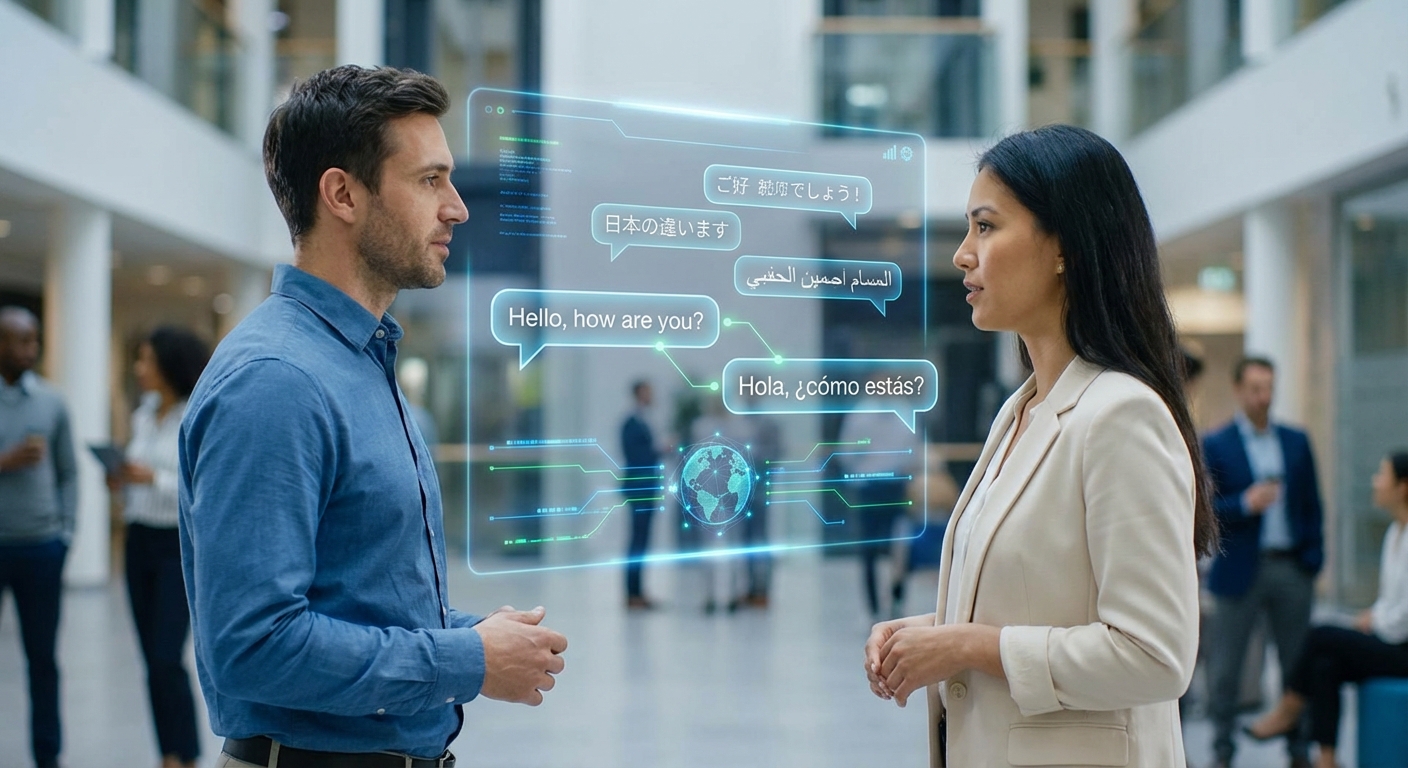
AI Interpreters: Breaking Language Barriers in Real Time represents one of the most significant developments in the AI Tools landscape today. The modern software stack is being rewritten. We are moving from strict command-line logic to natural language interfaces where English is the new programming language. This is the democratization of engineering; anyone who can articulate a problem can now build a solution, without needing to know how to code.
In this comprehensive analysis, we explore the historical context, technical underpinnings, market dynamics, and real-world case studies that define this pivotal moment. Whether you are an investor, a developer, or a policy maker, understanding these dynamics is essential for navigating the AI era.
1. Historical Context: How We Got Here
It began with GitHub Copilot in 2021, which shocked developers by completing entire functions from comments. Before that, 'No-Code' tools existed but were limited. The integration of LLMs turned every text field into a potential command line. The release of ChatGPT Plugins and later GPTs allowed these models to actually do things, not just talk about them.
This evolution was not linear—it was a series of step-functions. Each breakthrough unlocked new capabilities that were previously thought impossible, leading us to the inflection point we face today. Understanding this history is essential for anticipating what comes next.
2. Technical Deep Dive: Under the Hood
The emergence of 'Agentic' workflows allows tools to chain prompts autonomously. A system like AutoGPT breaks a goal into sub-tasks and executes them sequentially. Retrieval Augmented Generation (RAG) is the other key technology, connecting the AI to live, private data sources so it doesn't hallucinate. It reads your PDFs and internal documents before answering, grounding responses in verified facts.
The convergence of hardware acceleration and algorithmic innovation has reduced the cost of AI by 100x in the last 18 months, making AI Tools commercially viable at unprecedented scale. This is the defining economic force of our era.
3. Market Analysis & Economic Impact
Productivity software is being reimagined. Microsoft 365 Copilot and Google Duet are charging $30 per user per month, a massive revenue uplift for incumbents. We are seeing the death of the 'SaaS Silo'—AI acts as the glue that connects Salesforce, Slack, and Email, allowing for cross-platform automation that was previously impossible without expensive custom API integrations.
We are witnessing a capital rotation of historic proportions. The winners of this cycle will likely define the global economy of the 2030s. The organizations that move decisively now will have structural advantages that are difficult to overcome later.
4. Real-World Case Study
Klarna, the fintech giant, replaced its entire Tier 1 customer support with an AI agent. It handled 2.3 million conversations in one month—equivalent to 700 full-time agents—with higher customer satisfaction scores and a 25% drop in repeat inquiries. This isn't theoretical; it's a massive bottom-line impact happening right now, and it's a preview of what every service industry will face.
This is not a hypothetical future—it is a present reality. Companies that ignore these case studies risk obsolescence. The "wait and see" approach is the most dangerous strategy in an exponential market where competitive advantages compound rapidly.
5. Challenges and Considerations
The 'Blank Page' problem persists. Users often don't know what to ask. Prompt Engineering is a temporary patch, but the tools need to become more proactive. There is also the issue of dependency; junior developers relying solely on AI tools may fail to develop the deep understanding of logic required to debug complex system failures when the AI gets it wrong.
These challenges are not insurmountable, but they require deliberate effort. The organizations and policymakers that engage seriously with these difficulties will be better positioned to capture the benefits of this technology while managing its risks.
6. Future Projections (2025-2030)
The OS is the ultimate AI tool. We expect Windows and macOS to integrate AI so deeply that it can see your screen and understand your context. Applications will disappear into the background; the interface will be the conversation. The next generation of AI tools won't wait to be asked—they will anticipate your needs and act proactively.
As we look to the horizon, three key trends will dominate the next five years:
- Scalability: Models will become dramatically more efficient, enabling deployment on edge devices and in resource-constrained environments.
- Ubiquity: AI capabilities will be embedded in every software product and physical device, becoming invisible infrastructure.
- Autonomy: The transition from AI as a tool to AI as an agent—systems that pursue goals, not just answer questions—will reshape every industry.
Conclusion
In the final analysis, AI Interpreters: Breaking Language Barriers in Real Time is a gateway to the next era of human capability. The organizations that master this domain will define the economy of the 2030s. The question is no longer if you will adapt, but how fast—and whether you will lead or follow.
Stay tuned to AI Trend Global as we continue to track this rapidly evolving story with the depth and precision it deserves.